Showing posts with label Richard II. Show all posts

Friday, October 21, 2011

Comparative Translation


These are the three texts that I analyzed side by side (feel free to skip over them to the explanation afterward if you wish), of one of my favorite speeches by King Richard II, exhibiting the emotional, depressing experience of losing it all:

Original:

"What must the king do now? Must
he submit?
The king shall do it: must he be deposed?
The king shall be contented: must he lose
The name of king? o’ God’s name, let it go:
I’ll give my jewels for a set of beads,
My gorgeous palace for a hermitage,
My gay apparel for an almsman’s gown,
My figured goblets for a dish of wood,
My sceptre for a palmer’s walking staff,
My subjects for a pair of carved saints
And my large kingdom for a little grave,
A little little grave, an obscure grave;
Or I’ll be buried in the king’s highway,
Some way of common trade, where subjects’ feet
May hourly trample on their sovereign’s head;
For on my heart they tread now whilst I live;
And buried once, why not upon my head?
Aumerle, thou weep’st, my tender-hearted cousin!
We’ll make foul weather with despised tears;
Our sighs and they shall lodge the summer corn,
And make a dearth in this revolting land.
Or shall we play the wantons with our woes,
And make some pretty match with shedding tears?
As thus, to drop them still upon one place,
Till they have fretted us a pair of graves
Within the earth; and, therein laid,—there lies
Two kinsmen digg’d their graves with weeping eyes.
Would not this ill do well? Well, well, I see
I talk but idly, and you laugh at me.
Most mighty prince, my Lord Northumberland,
What says King Bolingbroke? will his majesty
Give Richard leave to live till Richard die?
You make a leg, and Bolingbroke says ay."


Traducción en Verso por Santiago Sevilla


¿Debe el rey ahora someterse?
¿De hacerlo, vanle a deponer?
¿Si ha de aceptarlo, de rey, el nombre
Perderá? ¡Por Dios, lo he de perder!
A cambio de mis joyas, un rosario;
Por mi bello palacio, una ermita;
Por mi túnica dorada, jubón
De mendicante, y por mi cáliz de oro,
Cuenco de madera he de trocar;
Mi cetro, por bordón de peregrino,
Mis siervos, por imágenes talladas,
Mi inmenso reino, por sepultura,
Oscura, o tumba en camino real,
Alguna frecuentada vía,
Donde la gente pise mi frente,
Cual hoy, mi corazón doliente,
A su ida y vuelta, cada día.
Aumerle, lloras, tierno primo.
Con borrasca de lágrimas te oprimo.
La mies caerá ante mis suspiros,
Y eriales haránse los barbechos.
Excaven tumbas nuestras lágrimas
Y veamos, entre dos, quien gana,
Y con ello, conquistemos fama,
Enterrados en la luenga cava,
De ser llorones consumados.
Mas ya veo que digo tontería,
Y merezco que de mi se ría.
Poderoso príncipe Northumberland,
¿Qué manda a decir rey Bolingbroke?
¿Permíteme vivir, hasta que muera?
¿Ordénate Bolingbroke, que digas, sí?

Traduccion de Luis Astrana Marín
Traducida del ingles, 1923  

¿Qué debe hacer el rey ahora? ¿Debe someterse? Lo hará. ¿Debe ser destronado? Quedará satisfecho. ¿Debo perder el nombre de rey? En nombre de Dios, que lo pierda. Daré mis joyas por un rosario, cambiare mi palacio suntuoso por una ermita, mis ricas vestiduras por el traje de un mendigo, mis cubiletes cincelados por un par de santos esculpidos y mi gran reino por una modesta tumba, una más que modesta, modestísima tumba, una oscura tumba; o seré enterrado en el camino real, en una ruta de común tránsito, para que los pies de mis súbditos puedan a todas horas marchar sobre la cabeza de su soberano. Porque bien pisotean mi corazón ahora que vivo, y una vez enterrado, ¿Por qué no han de hacerlo sobre mi cabeza? ¡Lloras, Aumerle, primo de mi corazón! Engendraremos malos tiempos con nuestras lágrimas menospreciadas. Ellas y nuestros suspiros abatirán las mieses estivales y traerán el hambre a este país sublevado. ¿O debemos hacernos los locos con nuestros infortunios y convertir nuestras lágrimas en tema de alguna inda apuesta, por ejemple, dejándolas correr siempre en el mismo sitio, hasta que nos hayan cavado un par de tumbas en la tierra y allí se suscriba: “Aquí yacen dos parientes que cavaron sus tumbas con lágrimas de sus ojos”? Es que este mal no estaría así bien. Bien, bien, ya veo que no digo más que necedades y que os burláis de mí. Milord Northumberland, muy poderoso príncipe, ¿Qué dice el rey Bolingbroke? ¿Su Majestad se digna autorizar a Ricardo a vivir hasta que Ricardo muera? ¿No tenéis que hacer más que una reverencia, y Bolingbroke dirá que sí.


As seen above, the first translation, by Santiago Sevilla, was done in verse. I love the way this one sounds, and it captures almost to a tea the kind of language that Shakespeare used. As one example, Shakespeare employs 9-11 syllables in each line, as done the Spanish translation. The entirety is written iambically (with a few exceptions, both in English and in Spanish). It has a Shakesperian feel to it with the language. Semantically, though... I think it is quite deficient. A few things that are entirely left out, that I think are important are the short phrases:

"What must the king do now?"

"The king shall do it.... [&] The king shall be contented."

"Where subjects’ feet... [&]
May hourly trample on their sovereign’s head


As in the last example, the idea of his subjects overthrowing him is not mentioned. This to me is significant because it is an extra sign if humiliation, which this speech is trying to capture.

Also, in the first examples, some of what seems to me like sarcasm is omitted. Saying that he shall do it cannot be taken at face value if we also look at the quotes where he is blown up emotionally when he thinks about losing it all. And so, we need these few lines to show the bitterness he feels. 

These are just a few examples.

In contrast, the second translation, by Luis Astrana Marín, is very accurate semantically while omitting the elements of verse and iamb. Still, I love the accuracy of meaning here. Take a look at the difference even spatially:

Till they have fretted us a pair of graves
Within the earth; and, therein laid,—there lies
Two kinsmen digg’d their graves with weeping eyes.
Would not this ill do well?

2nd: (literal)
hasta que nos hayan cavado un par de tumbas
en la tierra y allí se suscriba: “Aquí yacen dos parientes 
que cavaron sus tumbas con lágrimas de sus ojos”? 
Es que este mal no estaría así bien.

1st (verse)
Y con ello, conquistemos fama,
Enterrados en la luenga cava,
De ser llorones consumados.

And so, my hypothesis is that you cannot translate accommodating to both the true, full meaning and also the poetry. In this way, it is hard for me to believe that an exemplary translation of Shakespeare's Richard II can be done. Both elements are essential. I imagine that for readers of Shakespeare in Spanish they will just have to take their pick.

Posted by Erik on 11:27 AM · Comments (3) ·

Thursday, October 20, 2011

Richard II analysis: cinema production


So, after watching Richard II, I was pretty impressed with how the emotion was captured, but there were a few things I didn't favor so much. A few thoughts:

Music
I was displeased by the lack of soundtrack in the production (BBC, 1978). It doesn’t occur at all, and the only other sounds that exist are the occasional diegetic trumpet blasts when the stage directions call for them. In this way it can be seen that fidelity to the text was one of the highest priorities in producing this version. A soundtrack could have certainly enhanced the emotional apexes that are high in this production. I wonder if it was a conscientious decision to leave music out, or if it was simply not an established thing to do at the time that this production was released.

Cutting
Further evidence that the production is ever-true to the text is that there are only two brief sections where text has been cut, and only for a half a page or so. The plot does not suffer at all because of the lack of those pages, and must have only been removed of time purposes.

Casting
Since the emotional experience of the play is so high, like I mentioned I think that music should have played a more integral part. In any case, the actors that were casted performed very energetically their respective roles. It was easy to capture the depth of the experience when Richard raves emphatically when he feels betrayed: 

“O villains, vipers, damn’d without redemption!
Dogs, easily won to fawn on any man!
Snakes, in my heart-blood warm’d, that sting my heart!
Three Judases, each one thrice worse than Judas!
Would they make peace? terrible hell make war
Upon their spotted souls for this offence”

Act III, scene ii

To be King

The actor chosen for this role, Sir Derek Jacobi, impressed me most with his acting. In especially the scene when he returns from the Irish war (which I quoted above), he goes from triumphant to concerned to consoled to explosively angry, then depressed and absolutely inconsolable. With further developments and the loss of his crown officially and the forced estrangement from his wife (the “double divorce”), he sometimes goes nuts in emotional rage and sometimes gives up all hope. The dynamism in his reaction has been teaching me a lot about the nature of men, and like any good literature, teaches about what it means to be a human. I was unsure before about why Shakespeare wrote so many histories, but I am convinced that this is why. I guess I was naïve about a “history”, letting my bias say that it would be documentary. I should have known better.

But anyway, back to Richard II: I have learned through him that the higher you esteem yourself and love your pride, the harder you will fall. This is the main message that I am got out of Richard II’s emotional outbursts as his life crumbled out from under him. Other Kings, perhaps, had they not loved their station so much and the power associated with it could relinquish their authority much more easily. Richard says:

“Wrath-kindled gentlemen, be ruled by me;
Let’s purge this choler without letting blood:
This we prescribe, though no physician;
Deep malice makes too deep incision;
Forget, forgive; conclude and be agreed;
Our doctors say this is no month to bleed”.

Act 1 scene i

The above quote exemplifies the type of all-powerful-ruler Richard II sees himself as. In an important dispute, in which one member (Bolingbroke) wants an attorney, Richard refuses to give it to him. He commands instead what is to be done. Even though the argumenters eventually convince him to let them fight it out, he cancels that proceeding right before it is about to begin, referring back to this original plan or not “letting blood”. This decision eventually leads to Richard’s downfall and tantrum when he gives up his crown.

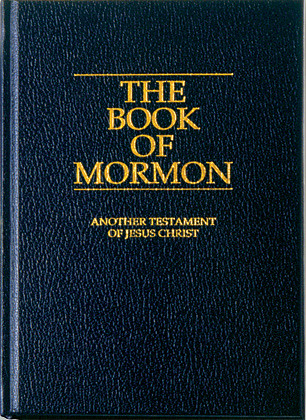
Another king, King Benjamin, in the Book of Mosiah from the Book of Mormon, is like Richard’s antithesis. Although both believe that they have divine approval for their kingship, but their attitude is totally different. King Benjamin says:

“I have not commanded you to come up hither that ye should fear me, or that ye should think that I am of myself am more than a mortal man. But I am like as yourselves, subject to all manner of infirmities in body and mind; yet I have been chosen by this people, and consecrated by my father, and was suffered by the  hand of the Lord that I should be a ruler and a king over this people” (from LDS.org).

He only wanted to serve the people, and to his son gave up the crown easily. Richard was quite the opposite, such was his zeal and jealousy.

So, back to my original thought, then: The more you love your pride, the harder it is to fall. King Benjamin, we read later, has always served his people and been selfless. From the entire text of the play, we encounter many evidences that hint at the fact that Richard II really enjoyed the power he had, in contrast.

Questions answered

This was the answer to my first question, “Why so many histories?” They are simply conducive to emotionally powerful things we can learn from, pride being one of them.

My second question was even more enjoyable for me to investigate, and that was about the translations of Spanish of Richard II. As I mentioned before, Lamarca has published an amazing article about his view of Richard II, and the role of poetry in history. I have begun reading a fantastic book called “Shakespeare en España”, compiled by Angel-Luis Pujante and Laura Campillo, which tells all about Shakespeare’s reception in the Hispanic world. It is a collection of essays on various topics, most of them literary criticism about Shakespeare (as was Lamarca’s article commented on earlier), proving to me at least that Shakespeare’s influence has been great in the last century in Spain. I have been attempting to contact the editors with a few research questions that I have in hopes that they might be able to help direct my research. Awaiting the reply!!!

Comparative Translations

Outside of academic commentary, though, I have been trying to do some of my own comparative translation. Time to get some lunch, but tune in to the next blog here.

Posted by Erik on 2:22 PM · Comments (0) ·

Friday, October 14, 2011

Master Historian, Poet


"How long a time lies in one
little word!
Four lagging winters and four wanton springs 
End in a word:  such is the breath of kings."  

   -Bolingbroke: Richard II, Act I scene iii


"And some will mourn in ashes, some coal-black,
For the deposing of a rightful king."

          - Richard II: Richard II, Act V scene i

           Carlos Navarro Lamarca, in his studies of Shakespeare, has commented that the histories are "marvelously real", and in particular that Richard II demonstrates in itself "clear artistic representations of the idea of history" (see page 377).


           Personally, I was first dubious as to why Shakespeare wrote histories, and so many of them. I think I am starting to seriously be converted, especially after reading the play, and watching the BBC 1978 film adaptation. What captured my attention was how much of human nature really comes out of the text to comment on humanity, even though it all happened so long ago. Richard II comments on honor, power, pride, and self-image in such a way that the characters that tell the story almost become like acquaintances or even friends of ours. I am anxious to more closely examine the characters' lives and try to determine what message exactly Shakespeare is trying to get out. After all, "what else better to uncover the nature of humanity but our own history?" as Averill said.

           Shakespeare is great because he captured the vision of using history as a medium for unearthing humanity. Going back to Lamarca, who titles Shakespeare as a "poet-historian",  we understand that human experience has not ever been totally unique to us. If others have gone before and experienced similar things to those which we have felt, why not read about them and learn from them? It is here that Shakespeare is our asset. He takes us beyond the primary texts and textbooks and teases out the poignancy (through poetry, in this case, as the entire play is in verse) of the events of the past in a way "that elevates humanity much above the tragic or comic face of individual lives" (own transl.).


             Richard, as seen in the quote above, has been dethroned, and suffers several serious crises as a result. Bolingbroke's motivations throughout his ascension also seem to change throughout the play; sometimes he seems to want to simply defend right of law, at other times shows bitter revenge. I want to investigate this a little more.

Posted by Erik on 2:29 PM · Comments (1) ·

Friday, October 7, 2011

Richard II... oh my History


Sat down to think about Shakespeare's Histories. Maybe you have done the same thing recently. I've read Julius Caesar and even played a part in it when I was in 8th grade, but other than that I do not have too much experience in the genre. My first reaction was a list of pessimistic questions, unfortunately:

"Why do histories, Shakespeare? Doesn't seem like a traditional genre for theatre."
"Even if you had a good reason, why write so many?"
"What kind of reaction were you trying to get out of the people?"


C'mon Erik, I thought. This is Shakespeare. There has to be a reason why Shakespeare has chosen the medium of history to present a play. Maybe it is that he finds something sacred about remembering and appreciating the past, or maybe he has a strange fascination with Kings (ever notice how there always seems to be one in every play?). Perhaps there was a demand for it, and he found a way to work it in his own style. I want to find out what motive he had. It must have been powerful, because Richard II is considered as only a part of the larger work of one History-- along with Henry IV part 1, Henry IV part 2, and Henry V. Hmm.

My second reaction, looking at the text, is wondering about why he chose to write this play in nearly all  verse, as opposed to other plays. Would this result in more or less problems for translation of Shakespeare into other languages?

So, I decided to do a little research. It turns out that La Universidad de Alicante, Spain, has a department of English Philology that has compiled over 500 translations of Shakespeare into Spanish from the late 1700s until today. Richard II has been translated significantly at least 7 times since 1870. How cool would it be to do a comparative analysis of the 7 translations (the last one ending in 1998) to determine how the Spanish language itself has evolved in the last century? So many questions...


Posted by Erik on 10:48 AM · Comments (2) ·